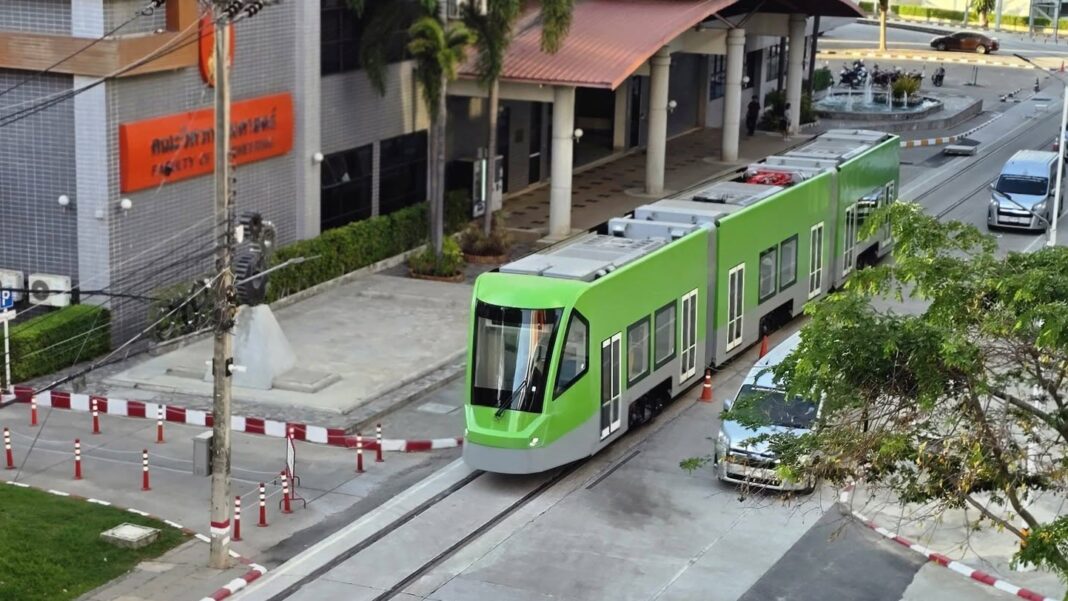
First Thai-built light rail tram begins test runs in Khon Kaen
KHON KAEN — Thailand’s first domestically designed and built light rail tram has begun test runs at Rajamangala University of Technology Isan (RMUTI), Khon Kaen campus, drawing widespread attention online.
The prototype tram, developed by Thai researchers, is currently undergoing daily trial operations along a 450-meter track inside the university, running from the main entrance past campus buildings to a maintenance center. Testing began in December, with full service expected within a year.
The project has been under research and development for six to seven years, led by Asst. Prof. Dr. Paiwan Kerdtruat of the Faculty of Engineering at RMUTI Khon Kaen. The research formally began in 2020 with funding support from the Program Management Unit for Competitiveness (PMUC) over a three-year period.
Paiwan said the tram was entirely designed by Thai engineers, who studied rail systems in Germany, Japan and China before developing the prototype. The initiative aims to create a domestically produced light rail system that could eventually be deployed in cities such as Khon Kaen, Chiang Mai and Phuket.
Khon Kaen has a long-term 26-kilometer light rail project planned, though it has yet to materialize.
The three-car tram can carry up to 120 passengers. It features a hybrid system powered by batteries and overhead electric lines, with future plans to develop a hydrogen-powered version.
Currently, students and visiting delegations have been allowed to ride the tram during the testing phase. Construction of stations is planned ahead of broader service rollout within about a year, with long-term plans to expand routes around Kaen Nakhon Lake.
Paiwan said around 80% of the tram’s components were produced in Thailand, with parts sourced from manufacturers in provinces including Ayutthaya, Chonburi and Samut Prakan. Some specialized components were imported and assembled domestically.
Since images of the tram were shared online, the project has received positive feedback, with many expressing hope that Thailand can develop and manufacture its own modern rail systems.
https://www.khaosodenglish.com/news/2026/02/19/first-thai-built-light-rail-tram-begins-test-runs-in-khon-kaen/
Google Translation:
รถไฟฟ้ารางเบาที่ผลิตในประเทศไทยคันแรก เริ่มทดสอบวิ่งแล้วที่ขอนแก่น
ภาพ: ธนาดอม รัสรีรัตน์
ขอนแก่น — รถไฟฟ้ารางเบาที่ออกแบบและผลิตในประเทศไทยคันแรก ได้เริ่มทดสอบวิ่งแล้วที่มหาวิทยาลัยเทคโนโลยีราชมงคลอีสาน (รMUTI) วิทยาเขตขอนแก่น ซึ่งได้รับความสนใจอย่างกว้างขวางในโลกออนไลน์
รถไฟฟ้าต้นแบบที่พัฒนาโดยนักวิจัยชาวไทย กำลังอยู่ระหว่างการทดลองวิ่งทุกวันบนรางยาว 450 เมตรภายในมหาวิทยาลัย โดยวิ่งจากทางเข้าหลัก ผ่านอาคารต่างๆ ไปยังศูนย์ซ่อมบำรุง การทดสอบเริ่มขึ้นในเดือนธันวาคม และคาดว่าจะเปิดให้บริการเต็มรูปแบบภายในหนึ่งปี
โครงการนี้อยู่ระหว่างการวิจัยและพัฒนามาเป็นเวลาหกถึงเจ็ดปี นำโดยผู้ช่วยศาสตราจารย์ ดร. ไพวรรณ เกิร์ดตรุท จากคณะวิศวกรรมศาสตร์ รMUTI ขอนแก่น การวิจัยเริ่มต้นอย่างเป็นทางการในปี 2020 โดยได้รับการสนับสนุนด้านเงินทุนจากหน่วยบริหารโครงการเพื่อการแข่งขัน (PMUC) เป็นระยะเวลาสามปี
ปายวันกล่าวว่า รถรางนี้ได้รับการออกแบบโดยวิศวกรชาวไทยทั้งหมด ซึ่งได้ศึกษาดูงานระบบรางในเยอรมนี ญี่ปุ่น และจีน ก่อนที่จะพัฒนาต้นแบบ โครงการนี้มีเป้าหมายที่จะสร้างระบบรถไฟฟ้ารางเบาที่ผลิตในประเทศ ซึ่งอาจนำไปใช้ในเมืองต่างๆ เช่น ขอนแก่น เชียงใหม่ และภูเก็ตได้ในอนาคต
ขอนแก่นมีโครงการรถไฟฟ้ารางเบาระยะยาว 26 กิโลเมตร แต่ยังไม่เกิดขึ้นจริง
รถรางสามตู้สามารถบรรทุกผู้โดยสารได้สูงสุด 120 คน มีระบบไฮบริดที่ใช้พลังงานจากแบตเตอรี่และสายไฟฟ้าเหนือศีรษะ โดยมีแผนในอนาคตที่จะพัฒนารุ่นที่ใช้พลังงานไฮโดรเจน
ปัจจุบัน นักเรียนและคณะผู้แทนที่มาเยือนได้รับอนุญาตให้โดยสารรถรางในช่วงทดสอบ การก่อสร้างสถานีมีขึ้นก่อนที่จะเปิดให้บริการในวงกว้างภายในประมาณหนึ่งปี โดยมีแผนระยะยาวที่จะขยายเส้นทางรอบทะเลสาบแก่นนคร
ปายวันกล่าวว่าประมาณ 80% ของส่วนประกอบของรถรางผลิตในประเทศไทย โดยจัดหาชิ้นส่วนจากผู้ผลิตในจังหวัดต่างๆ เช่น อยุธยา ชลบุรี และสมุทรปราการ ชิ้นส่วนเฉพาะบางส่วนถูกนำเข้าและประกอบภายในประเทศ
หลังจากมีการเผยแพร่ภาพรถรางทางออนไลน์ โครงการนี้ก็ได้รับการตอบรับที่ดี โดยหลายคนแสดงความหวังว่าประเทศไทยจะสามารถพัฒนาและผลิตระบบรางที่ทันสมัยของตนเองได้