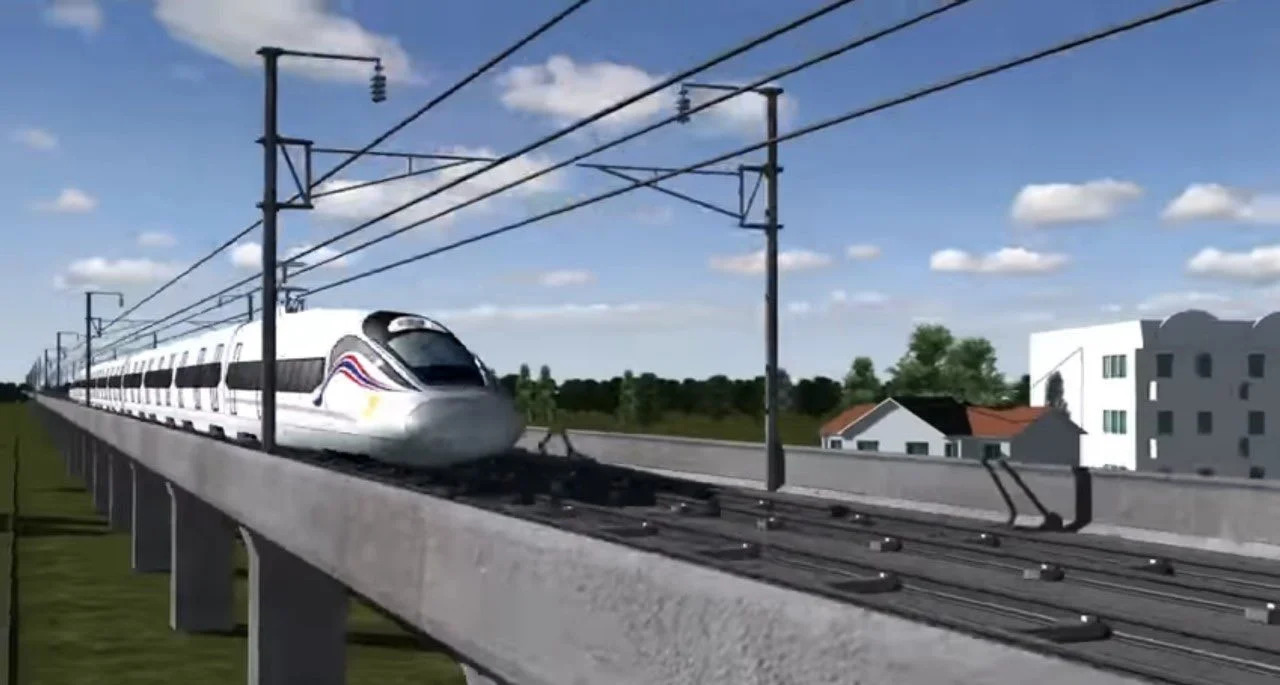
 Thailand’s first high-speed rail line, “Bangkok-Chiang Mai,” is facing challenges
Thailand’s first high-speed rail line, “Bangkok-Chiang Mai,” is facing intense competition, with hopes that the new government will allow the Environmental Impact Assessment (EIA) to continue before it expires.
Thailand’s first Shinkansen high-speed rail line, “Bangkok-Chiang Mai,” is hoping the new government will approve its Environmental Impact Assessment (EIA) to prevent it from expiring, despite being approved 9 years ago without construction. It plans to share its route with the Thai-Chinese high-speed rail project.
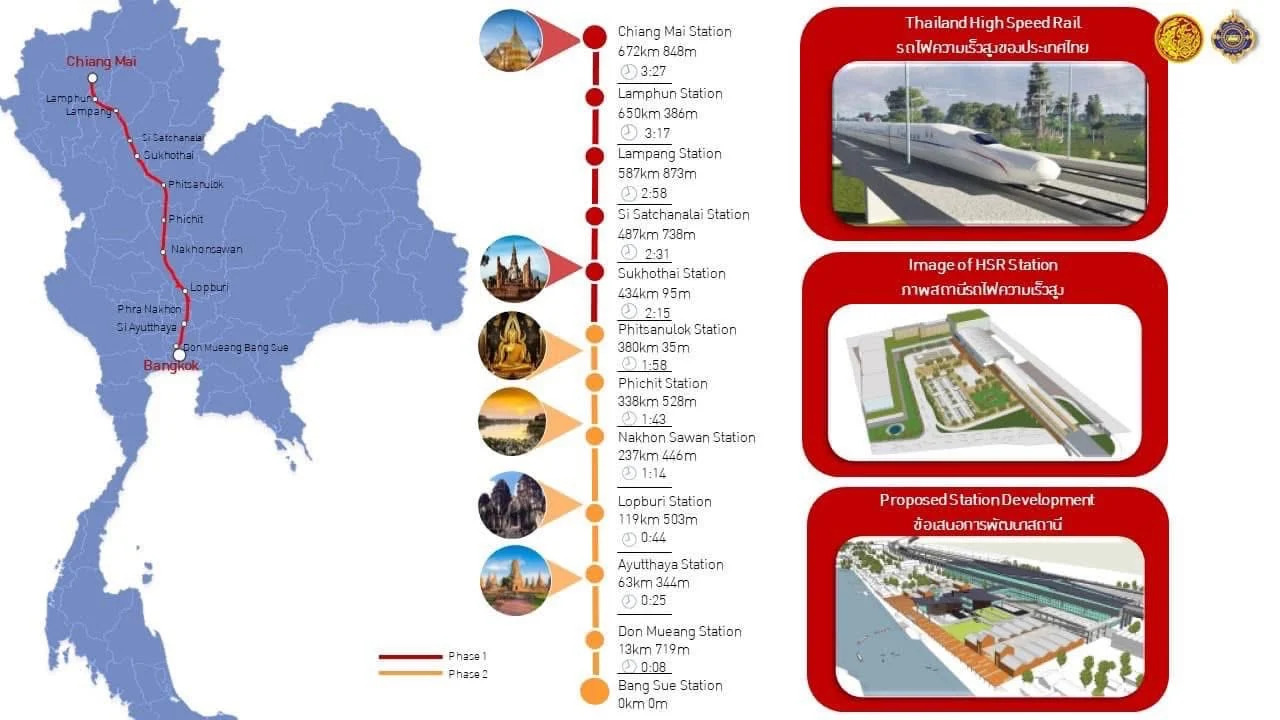
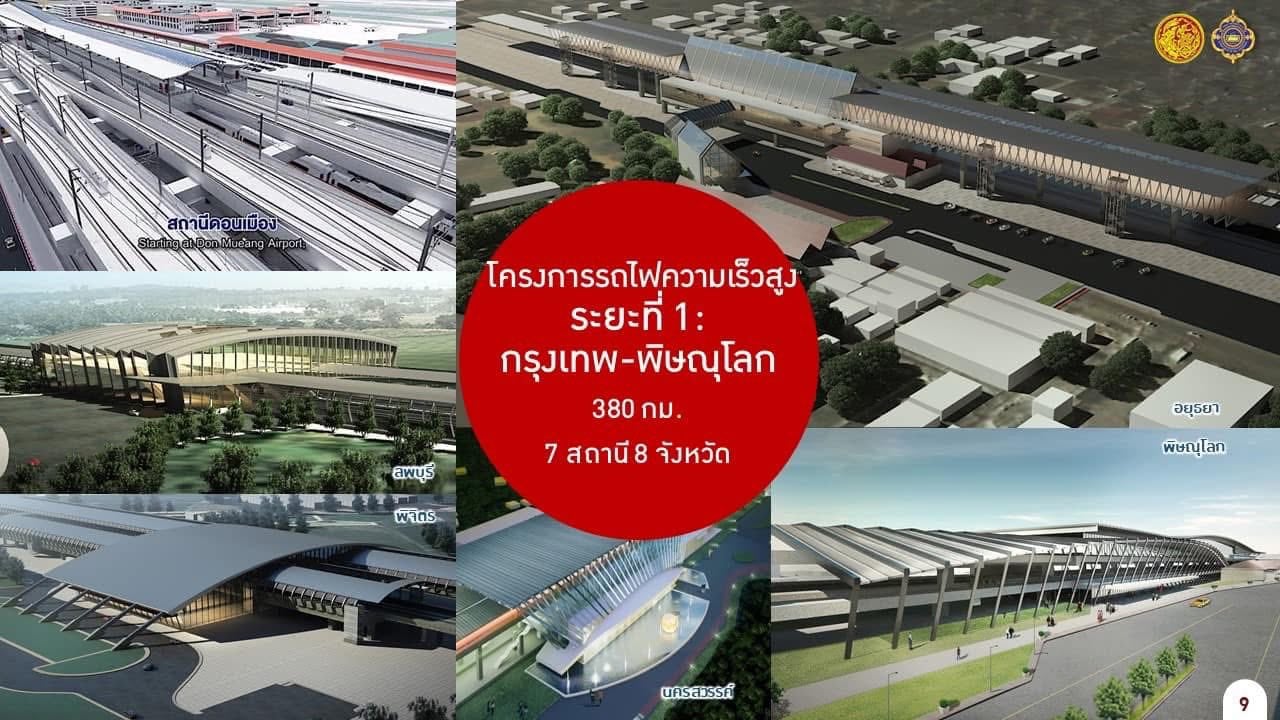
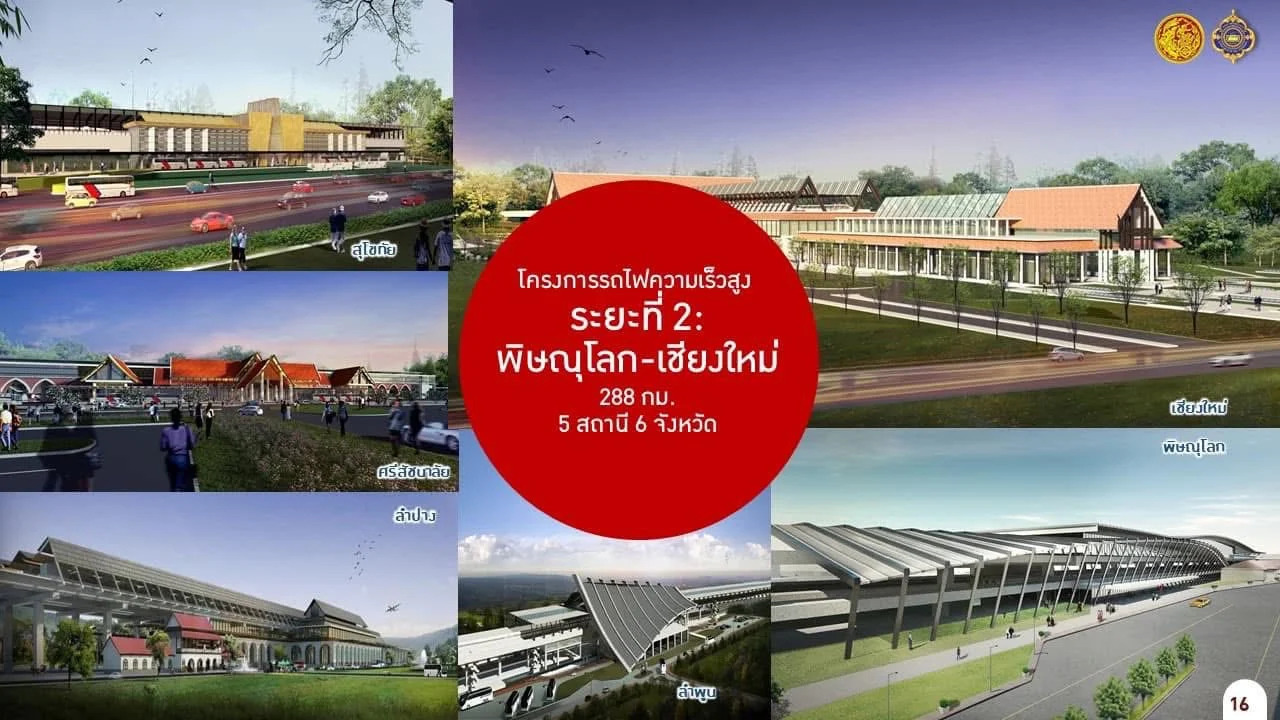
The Daily News’ Transportation Innovation Team reports that the Department of Rail Transport (DRT) has discussed with the Office of Natural Resources and Environmental Policy and Planning (ONREP) the Environmental Impact Assessment (EIA) report for the Bangkok-Chiang Mai high-speed rail development project, spanning 668 km. This project is a result of a memorandum of understanding signed between the Ministry of Transport (Thailand) and the Ministry of Land, Infrastructure, Transport and Tourism (MLIT) of Japan, concerning the development of rail systems in two phases: Phase 1, Bangkok-Phitsanulok (380 km), and Phase 2, Phitsanulok-Chiang Mai (288 km).
 Since the EIA (Environmental Impact Assessment) was approved by the Environmental Committee (EIA Committee) more than 5 years ago—the Bangkok-Phitsanulok section was approved on August 8, 2017, while the Phitsanulok-Chiang Mai section was approved on August 2, 2018—an EIA is normally valid for 5 years. If this period expires, the measures must be reviewed and resubmitted to the EIA Committee for consideration.
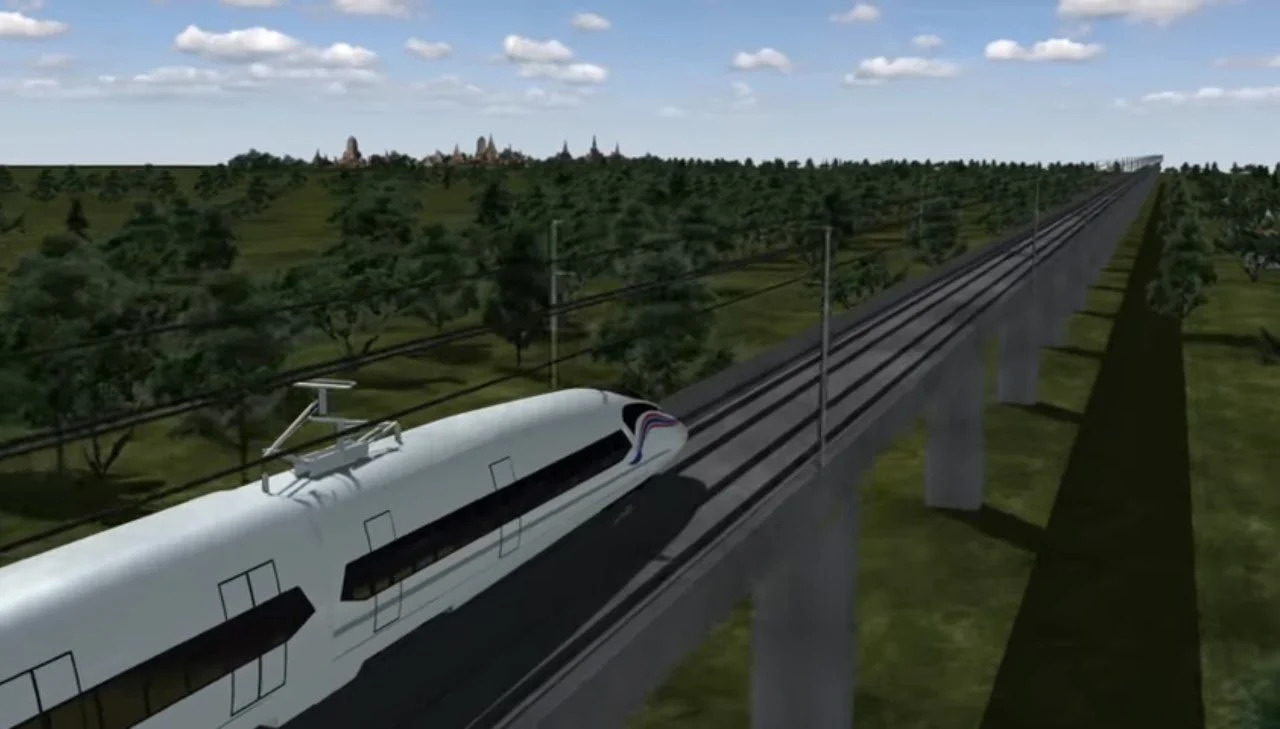
The Office of Environmental Policy and Planning (OEPP) commented that the Environmental Impact Assessment (EIA) has not expired because the project shares the same route between Bangkok Central Station and Ayutthaya Station as the Thai-Chinese high-speed rail project Phase 1 (Bangkok-Nakhon Ratchasima), which is currently under construction. It utilizes a shared elevated structure with four tracks – two on the northern line and two on the northeastern line. However, if construction begins, detailed discussions are needed regarding the signaling system, specifically whether two different systems will be required.
The project’s implementation depends on the policies of the new government after the election. Previously, during the Pheu Thai Party’s time in power, Transport Minister Suriya Jungrungruangkit postponed the project to prioritize the two phases of the Thai-Chinese high-speed rail project, as the government had budgetary constraints. Meanwhile, Japan was not yet ready to co-invest as proposed by Thailand, but was willing to support with Shinkansen technology.
According to a 2017 study by the Japan International Cooperation Agency (JICA), the project had an estimated investment of approximately 276,226 million baht. In 2021, the study revised the budget, reducing it by 14,472 million baht to a total of 261,754 million baht. The project includes 12 stations: Central Station, Don Mueang Station, Ayutthaya Station, Lopburi Station, Nakhon Sawan Station, Phichit Station, Phitsanulok Station, Sukhothai Station, Si Satchanalai Station, Lampang Station, Lamphun Station, and Chiang Mai Station…. สามารถติดตามต่อได้ที่ :
https://www.dailynews.co.th/news/5536857/
Google Translation:
โครงการรถไฟความเร็วสูงสายแรกของไทย “กรุงเทพฯ-เชียงใหม่” กำลังเผชิญกับความท้าทาย
โครงการรถไฟความเร็วสูงสายแรกของไทย “กรุงเทพฯ-เชียงใหม่” กำลังเผชิญกับการแข่งขันอย่างดุเดือด โดยมีความหวังว่ารัฐบาลใหม่จะอนุญาตให้การประเมินผลกระทบสิ่งแวดล้อม (EIA) ดำเนินต่อไปก่อนที่จะหมดอายุ
โครงการรถไฟความเร็วสูงชินคันเซ็นสายแรกของไทย “กรุงเทพฯ-เชียงใหม่” หวังว่ารัฐบาลใหม่จะอนุมัติการประเมินผลกระทบสิ่งแวดล้อม (EIA) เพื่อป้องกันไม่ให้หมดอายุ แม้ว่าจะได้รับการอนุมัติเมื่อ 9 ปีที่แล้วโดยที่ยังไม่มีการก่อสร้างก็ตาม โครงการนี้วางแผนที่จะใช้เส้นทางร่วมกับโครงการรถไฟความเร็วสูงไทย-จีน
ทีมงานนวัตกรรมการขนส่งของเดลี่นิวส์รายงานว่า กรมการขนส่งทางราง (DRT) ได้หารือกับสำนักงานนโยบายและแผนทรัพยากรธรรมชาติและสิ่งแวดล้อม (ONREP) เกี่ยวกับรายงานการประเมินผลกระทบสิ่งแวดล้อม (EIA) สำหรับโครงการพัฒนารถไฟความเร็วสูงกรุงเทพฯ-เชียงใหม่ ระยะทาง 668 กิโลเมตร โครงการนี้เป็นผลจากบันทึกความเข้าใจที่ลงนามระหว่างกระทรวงคมนาคม (ประเทศไทย) และกระทรวงที่ดิน โครงสร้างพื้นฐาน การขนส่ง และการท่องเที่ยว (MLIT) ของญี่ปุ่น เกี่ยวกับการพัฒนาระบบรถไฟในสองระยะ ได้แก่ ระยะที่ 1 กรุงเทพฯ-พิษณุโลก (380 กม.) และระยะที่ 2 พิษณุโลก-เชียงใหม่ (288 กม.)
เนื่องจากการประเมินผลกระทบสิ่งแวดล้อม (EIA) ได้รับการอนุมัติจากคณะกรรมการสิ่งแวดล้อม (คณะกรรมการ EIA) มาแล้วกว่า 5 ปี—ส่วนกรุงเทพฯ-พิษณุโลกได้รับการอนุมัติเมื่อวันที่ 8 สิงหาคม 2560 ในขณะที่ส่วนพิษณุโลก-เชียงใหม่ได้รับการอนุมัติเมื่อวันที่ 2 สิงหาคม 2561—การประเมินผลกระทบสิ่งแวดล้อมโดยทั่วไปจะมีอายุ 5 ปี หากหมดอายุลงแล้ว มาตรการต่างๆ จะต้องได้รับการทบทวนและส่งให้คณะกรรมการ EIA พิจารณาอีกครั้ง
สำนักงานนโยบายและแผนสิ่งแวดล้อม (OEPP) ให้ความเห็นว่า การประเมินผลกระทบสิ่งแวดล้อม (EIA) ยังไม่หมดอายุ เนื่องจากโครงการนี้ใช้เส้นทางเดียวกันระหว่างสถานีรถไฟกลางกรุงเทพฯ และสถานีอยุธยา กับโครงการรถไฟฟ้าความเร็วสูงไทย-จีน ระยะที่ 1 (กรุงเทพฯ-นครราชสีมา) ซึ่งกำลังอยู่ระหว่างการก่อสร้าง โดยใช้โครงสร้างยกระดับร่วมกันที่มี 4 ราง – 2 รางบนสายเหนือ และ 2 รางบนสายตะวันออกเฉียงเหนือ อย่างไรก็ตาม หากเริ่มการก่อสร้าง จะต้องมีการหารือรายละเอียดเกี่ยวกับระบบสัญญาณ โดยเฉพาะอย่างยิ่งว่าจะต้องใช้ระบบที่แตกต่างกันสองระบบหรือไม่
การดำเนินโครงการขึ้นอยู่กับนโยบายของรัฐบาลชุดใหม่หลังการเลือกตั้ง ก่อนหน้านี้ ในสมัยพรรคเพื่อไทย รัฐมนตรีว่าการกระทรวงคมนาคม สุริยา จุงรุ่งเรืองกิจ ได้เลื่อนโครงการนี้ออกไปเพื่อให้ความสำคัญกับโครงการรถไฟฟ้าความเร็วสูงไทย-จีน 2 ระยะ เนื่องจากรัฐบาลมีข้อจำกัดด้านงบประมาณ ขณะเดียวกัน ญี่ปุ่นยังไม่พร้อมที่จะร่วมลงทุนตามที่ไทยเสนอ แต่ยินดีที่จะสนับสนุนด้วยเทคโนโลยีชินคันเซ็น
จากรายงานการศึกษาของสำนักงานความร่วมมือระหว่างประเทศแห่งญี่ปุ่น (JICA) ในปี 2017 โครงการนี้มีงบประมาณการลงทุนประมาณ 276,226 ล้านบาท ต่อมาในปี 2021 รายงานได้ปรับลดงบประมาณลง 14,472 ล้านบาท เหลือ 261,754 ล้านบาท โครงการนี้ครอบคลุม 12 สถานี ได้แก่ สถานีเซ็นทรัล สถานีดอนเมือง สถานีอยุธยา สถานีลพบุรี สถานีนครสวรรค์ สถานีพิชิต สถานีพิษณุโลก สถานีสุโขทัย สถานีศรีสัชนาลัย สถานีลำปาง สถานีลำพูน และสถานีเชียงใหม่