
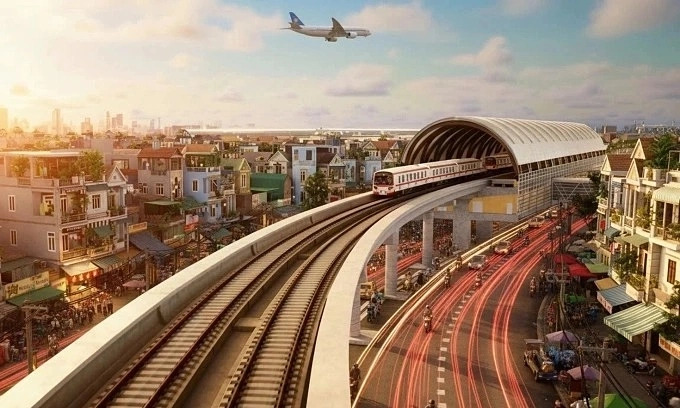
Ho Chi Minh City breaks ground on second metro line Ben Thanh-Tham Luong after 16 years of planning
Ho Chi Minh City on Thursday broke ground on its second metro line, Ben Thanh-Tham Luong, ending 16 years of planning delays and signaling renewed momentum for the city’s urban rail network.
The 11.3-kilometer line, with a total investment of more than VND55 trillion (US$2.1 billion), is one of several key transport projects launched to mark the 14th National Congress of the Communist Party of Vietnam.
City leaders say the project signals the start of an acceleration phase that aims to expand HCMC’s metro network to 187 kilometers by 2030.
Unlike previous metro projects, the Ben Thanh-Tham Luong line is fully funded by public investment under special mechanisms approved by the National Assembly, making it the first urban railway in Vietnam to adopt this funding model.
The line runs from Ben Thanh Station in the city center to the Tham Luong depot in the northwest, passing through 14 wards and following major corridors such as Cach Mang Thang Tam and Truong Chinh streets. More than 9 kilometers of the route will be underground, with 10 underground stations, one elevated station and a depot.
Construction is being carried out under an EPC contract by a consortium led by Vietnamese Truong Hai Group (Thaco).
Approved in 2010, the project was originally planned as an ODA-funded line with a completion target of 2016. Repeated delays caused by funding issues, procedures and site clearance pushed the project far behind schedule. In 2019, the total investment was revised upward to $2.1 billion, but further obstacles continued to stall progress.
City authorities later shifted the project from ODA loans to the Ho Chi Minh City budget, a move officials say has helped simplify procedures and give the investor greater control over contractors, technology choices and construction methods.
The Ben Thanh-Tham Luong metro will operate at GoA4 automation, the highest level of rail automation currently available, allowing fully driverless trains. Operations will be monitored and controlled remotely from a central control center, with the system designed to integrate seamlessly with the Ben Thanh-Suoi Tien metro and future lines.
Once completed, the line will initially use three-car trainsets with a maximum operating speed of up to 110 kph. At peak times, it is expected to carry more than 14,400 passengers per hour per direction. The route will connect directly with the Ben Thanh-Suoi Tien metro at Ben Thanh Station and link to future projects such as Metro Line 4 and the planned Ben Thanh-Can Gio rail line.
Vice chairman of the HCMC People’s Committee Bui Xuan Cuong said the project will play a leading role in shaping the city’s urban railway system and serve as a model for transit-oriented development. He noted that metro stations are expected to become hubs for modern residential, commercial, and service areas centered on public transport.
City leaders said the project’s groundbreaking comes at a time when key conditions are finally in place, with site clearance completed and sufficient funding secured. Authorities have urged investors and contractors to maintain progress and quality to ensure the line is completed by 2030.
The Ben Thanh-Tham Luong section is part of Metro Line 2. Another segment linking Ben Thanh to Thu Thiem is being prioritized to connect with the Thu Thiem-Long Thanh railway, forming a high-capacity passenger corridor toward Long Thanh International Airport.
Beyond this project, Ho Chi Minh City plans to complete several other metro and rail lines by 2030, including extensions of Metro Line 1, Metro Line 6, and new rail links to Long Thanh Airport and Can Gio. The city aims to expand the network to around 700 kilometers over the coming decades, transforming how residents move across the metropolitan area.
Source: https://e.vnexpress.net/news/news/traffic/ho-chi-minh-city-breaks-ground-on-second-metro-line-after-16-years-of-planning-5005994.html
Google Translation:
นครโฮจิมินห์เริ่มก่อสร้างรถไฟฟ้าใต้ดินสายที่สอง เบญถัน-ถัมลวง หลังวางแผนมา 16 ปี
ภาพจำลองสถานีตันบินห์ สถานีลอยฟ้าแห่งเดียวของรถไฟฟ้าใต้ดินสายที่สอง เบญถัน-ถัมลวง นครโฮจิมินห์ ภาพจาก MAUR
เมื่อวันพฤหัสบดีที่ผ่านมา นครโฮจิมินห์ได้เริ่มก่อสร้างรถไฟฟ้าใต้ดินสายที่สอง เบญถัน-ถัมลวง ซึ่งเป็นการสิ้นสุดความล่าช้าในการวางแผนนาน 16 ปี และเป็นการส่งสัญญาณถึงความคืบหน้าครั้งใหม่ของเครือข่ายรถไฟฟ้าในเมือง
รถไฟฟ้าสายนี้มีความยาว 11.3 กิโลเมตร มูลค่าการลงทุนกว่า 55 ล้านล้านดอง (2.1 พันล้านดอลลาร์สหรัฐ) เป็นหนึ่งในโครงการคมนาคมสำคัญหลายโครงการที่เปิดตัวเพื่อเฉลิมฉลองการประชุมสมัชชาแห่งชาติครั้งที่ 14 ของพรรคคอมมิวนิสต์เวียดนาม
ผู้นำเมืองกล่าวว่าโครงการนี้เป็นสัญญาณเริ่มต้นของช่วงเร่งรัดที่มุ่งขยายเครือข่ายรถไฟฟ้าใต้ดินของนครโฮจิมินห์ให้ได้ถึง 187 กิโลเมตรภายในปี 2030
แตกต่างจากโครงการรถไฟฟ้าใต้ดินก่อนหน้านี้ สายเบ็นถั่น-ถัมลวงได้รับการสนับสนุนทางการเงินจากภาครัฐทั้งหมดภายใต้กลไกพิเศษที่ได้รับอนุมัติจากสภาแห่งชาติ ทำให้เป็นรถไฟฟ้าในเมืองแห่งแรกในเวียดนามที่ใช้รูปแบบการระดมทุนนี้
เส้นทางนี้วิ่งจากสถานีเบ็นถั่นในใจกลางเมืองไปยังศูนย์ซ่อมบำรุงถัมลวงทางตะวันตกเฉียงเหนือ ผ่าน 14 เขต และใช้เส้นทางหลัก เช่น ถนนกัจมังทังตาม และถนนเจื่องชิง เส้นทางกว่า 9 กิโลเมตรจะเป็นทางใต้ดิน มีสถานีใต้ดิน 10 สถานี สถานีลอยฟ้า 1 สถานี และศูนย์ซ่อมบำรุง 1 แห่ง
การก่อสร้างดำเนินการภายใต้สัญญา EPC โดยกลุ่มบริษัทที่นำโดยกลุ่มบริษัทเจื่องไห่ (Thaco) ของเวียดนาม
โครงการนี้ได้รับการอนุมัติในปี 2553 โดยเดิมทีวางแผนไว้เป็นโครงการรถไฟฟ้าใต้ดินที่ได้รับเงินสนับสนุนจาก ODA (Official Development Authority) และมีเป้าหมายที่จะแล้วเสร็จในปี 2559 แต่ความล่าช้าซ้ำแล้วซ้ำเล่าที่เกิดจากปัญหาด้านเงินทุน ขั้นตอน และการเคลียร์พื้นที่ ทำให้โครงการล่าช้ากว่ากำหนดมาก ในปี 2562 การลงทุนทั้งหมดได้รับการปรับเพิ่มขึ้นเป็น 2.1 พันล้านดอลลาร์สหรัฐ แต่ก็ยังมีอุปสรรคต่างๆ ที่ทำให้ความคืบหน้าหยุดชะงัก
ต่อมาทางการเมืองได้เปลี่ยนโครงการจากเงินกู้ ODA ไปเป็นงบประมาณของเมืองโฮจิมินห์ ซึ่งเจ้าหน้าที่กล่าวว่าช่วยลดขั้นตอนต่างๆ และทำให้นักลงทุนมีอำนาจควบคุมผู้รับเหมา การเลือกเทคโนโลยี และวิธีการก่อสร้างมากขึ้น
รถไฟฟ้าใต้ดินเบ็นถั่น-ทัมลวงจะใช้ระบบอัตโนมัติ GoA4 ซึ่งเป็นระดับสูงสุดของระบบอัตโนมัติทางรางที่มีอยู่ในปัจจุบัน ทำให้สามารถเดินรถไฟได้โดยไม่มีคนขับ การดำเนินงานจะได้รับการตรวจสอบและควบคุมจากระยะไกลจากศูนย์ควบคุมส่วนกลาง โดยระบบได้รับการออกแบบให้บูรณาการอย่างราบรื่นกับรถไฟฟ้าใต้ดินเบ็นถั่น-สุ่ยเตียน และสายอื่นๆ ในอนาคต
เมื่อสร้างเสร็จสมบูรณ์แล้ว ในระยะแรกจะใช้ขบวนรถไฟ 3 ตู้ โดยมีความเร็วสูงสุดในการวิ่งอยู่ที่ 110 กิโลเมตรต่อชั่วโมง ในช่วงเวลาเร่งด่วน คาดว่าจะสามารถขนส่งผู้โดยสารได้มากกว่า 14,400 คนต่อชั่วโมงต่อทิศทาง เส้นทางนี้จะเชื่อมต่อโดยตรงกับรถไฟฟ้าใต้ดินเบ็นถัน-สุ่ยเทียน ที่สถานีเบ็นถัน และเชื่อมต่อกับโครงการในอนาคต เช่น รถไฟฟ้าใต้ดินสาย 4 และเส้นทางรถไฟเบ็นถัน-กันจิโอที่วางแผนไว้
รองประธานคณะกรรมการประชาชนนครโฮจิมินห์ บุย ซวน กวง กล่าวว่า โครงการนี้จะมีบทบาทสำคัญในการกำหนดรูปแบบระบบรถไฟฟ้าในเมือง และเป็นต้นแบบของการพัฒนาที่เน้นการขนส่งสาธารณะ เขากล่าวว่า สถานีรถไฟฟ้าใต้ดินคาดว่าจะกลายเป็นศูนย์กลางของพื้นที่อยู่อาศัย พาณิชย์ และบริการที่ทันสมัย โดยมีระบบขนส่งสาธารณะเป็นศูนย์กลาง
ผู้นำเมืองกล่าวว่า การวางศิลาฤกษ์ของโครงการนี้เกิดขึ้นในเวลาที่เงื่อนไขสำคัญต่างๆ พร้อมแล้ว โดยการเคลียร์พื้นที่เสร็จสมบูรณ์และได้รับเงินทุนเพียงพอแล้ว ทางการได้เร่งรัดให้นักลงทุนและผู้รับเหมารักษาความคืบหน้าและคุณภาพเพื่อให้มั่นใจว่าโครงการจะแล้วเสร็จภายในปี 2030
ส่วนของเส้นทางเบ็นถัน-ถัมลวงเป็นส่วนหนึ่งของรถไฟฟ้าสาย 2 อีกส่วนหนึ่งที่เชื่อมเบ็นถันกับทูเทียมกำลังได้รับการจัดลำดับความสำคัญเพื่อเชื่อมต่อกับทางรถไฟทูเทียม-ลองถัน ทำให้เกิดเส้นทางขนส่งผู้โดยสารความจุสูงไปยังสนามบินนานาชาติลองถัน
นอกเหนือจากโครงการนี้แล้ว นครโฮจิมินห์วางแผนที่จะสร้างรถไฟฟ้าและทางรถไฟสายอื่นๆ อีกหลายสายให้แล้วเสร็จภายในปี 2030 รวมถึงการขยายรถไฟฟ้าสาย 1 รถไฟฟ้าสาย 6 และการเชื่อมต่อทางรถไฟใหม่ไปยังสนามบินลองถันและกันจิโอ เมืองนี้ตั้งเป้าที่จะขยายเครือข่ายให้มีระยะทางประมาณ 700 กิโลเมตรในอีกหลายทศวรรษข้างหน้า ซึ่งจะเปลี่ยนแปลงวิธีการเดินทางของประชาชนในเขตมหานครอย่างสิ้นเชิง


